Makeup Tutorial for Crossdressers
-
Categories :
Tips for Crossdressing
Reading time: approximately 10 minutes
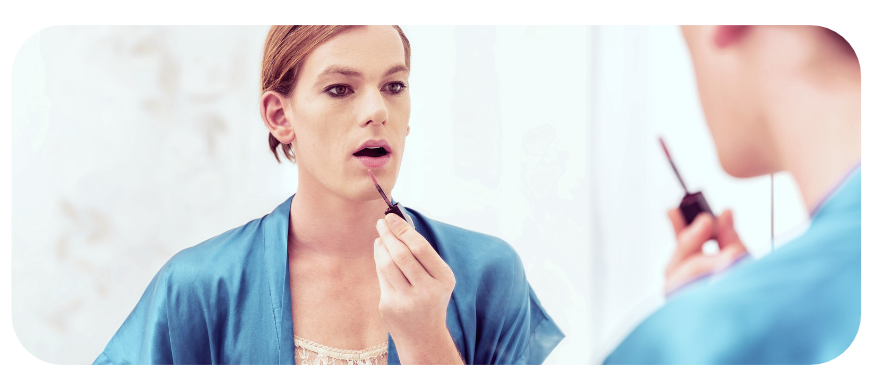
This makeup tutorial for crossdressers takes you through the process step by step, from beard shadow correction to contouring, eyes and lips. Whether this is your first attempt at crossdresser makeup or you want to improve your technique, the goal is the same: understand what each product does and create a feminine look that still feels like you.
The products and techniques used for male to female makeup or transgender makeup are fundamentally the same as those used by women every day. What changes is often where you focus your attention. For many crossdressers, this means first neutralising facial hair, then using strategic contour, brow shaping and eye makeup to visually soften certain features.
Every face is different, so these are general tendencies rather than rules. Makeup works best when you adapt it to your own face shape, skin and features.
| Feature | Male average | Makeup solution |
|---|---|---|
| Jawline | Often broader or more angular | Use subtle contour along the jaw and blend thoroughly |
| Brow ridge | Can appear more prominent | Shape the brows and use eyeshadow to visually open the eye |
| Beard shadow | Facial hair may create a blue or grey tone | Neutralise it with colour corrector before foundation |
| Eye depth | Eyes may appear deeper set | Use carefully placed lighter and darker eyeshadow shades |
| Lip size | Lips may appear thinner | Define with lip liner and slightly overline where appropriate |
Makeup is also only one part of creating your overall presentation. If you are exploring feminine clothing, proportions and styling too, our how to crossdress guide covers the complete process. For another aspect of creating a smoother silhouette, you can also read our tucking guide.
The core makeup technique does not change. The priorities often do. A crossdresser may need to tackle beard shadow first, then use contouring to soften the jaw or forehead before enhancing the eyes, cheeks and lips. The result can still be as natural or glamorous as you want.
Good makeup starts before you open your foundation. Preparing the skin creates a smoother surface, helps products blend more evenly and can improve how your makeup looks throughout the day.
Start with clean skin. Use a gentle cleanser to remove excess oil and impurities, then shave carefully if you have facial hair.
A close shave is especially important around the upper lip, chin, jaw and neck. Use a sharp razor and avoid repeatedly passing over irritated areas. Once finished, rinse the skin and give any redness a little time to settle before applying makeup.
Apply a moisturiser suited to your skin type and allow it to absorb. Then use a primer, particularly around areas with visible pores, texture or facial hair.
Primer will not physically remove beard texture, but it can create a more even base and help foundation sit smoothly over the skin. A small amount is usually enough.
For many beginners, learning to cover beard shadow makes one of the biggest differences to the finished look. Simply applying a thicker foundation is rarely the best solution. Colour correction allows you to neutralise the unwanted tone before adding coverage.
Even after a close shave, dark facial hair remains visible beneath the skin and can create a blue, grey or greenish cast. This is why beard shadow may remain visible through foundation.
The principle is simple: use a warm color to neutralise the cool tone of the beard before applying your normal complexion products.
Shave closely and prepare the skin.
Apply a small amount of orange, peach or red-toned corrector over visible shadow.
Concentrate on the upper lip, chin and jaw rather than covering the entire face.
Press the corrector gently into the skin with a sponge or fingertip (newer swipe, which can move the product and reduce coverage)
Allow the product to set for 30 seconds before applying foundation.
Build additional coverage only where the shadow is still visible.
Your corrector should complement both your skin tone and the intensity of your facial hair.
| Skin tone | Corrector shade |
|---|---|
| Fair | Light peach |
| Medium | Peach to orange |
| Deep | Deep orange to red-orange |
The exact shade varies from person to person, so experiment with a small amount before increasing the coverage.
Once the beard area is neutralised, foundation creates a more even complexion. The aim is not necessarily to hide every detail of your skin. For a natural result, build coverage gradually.
Choose your foundation according to your skin type, desired finish and required coverage. For crossdresser makeup, a medium-to-full coverage formula can be particularly useful if you have corrected facial hair underneath.
Matching your tone is equally important. Test shades around the jaw rather than on your hand. The right foundation should transition naturally between your face and neck without creating an obvious line.
Start in the centre of the face and work outward using a damp sponge or foundation brush. Apply a thin layer first, then add product only where necessary.
Pay attention to the jaw, hairline and neck. Careful blending in these areas helps prevent the foundation from looking like a mask.
Apply concealer selectively rather than covering the whole face. It can brighten beneath the eyes, provide extra coverage over remaining beard shadow and conceal individual blemishes.
A slightly brighter concealer beneath the eyes can also help create a fresher appearance, but avoid choosing a shade that is dramatically lighter than your foundation.
Strategic feminine makeup can change how the proportions of the face are perceived. Contour creates shadow, while blush and highlight bring selected areas forward. The secret is placement rather than simply using more products.
Contouring for crossdressers often focuses on visually softening the jawline and creating greater definition around the cheekbones.
Apply a cool-toned contour or bronzer beneath the cheekbone and gently around a strong jaw. Depending on your face shape, you can also use a small amount around the forehead or sides of the nose.
Avoid drawing harsh lines. Whether you use a cream stick, powder or liquid product, blend until the contour looks like a natural shadow rather than a stripe. Apply a touch of highlighter to the tops of the cheekbones, bridge of the nose and brow bone to bring light to the face and enhance a softer, more feminine look.
Blush adds warmth and can help draw attention toward the centre and upper areas of the face. Try applying it to the apples of the cheeks and blending upward toward the temples.
Placement matters more than intensity. Start lightly and gradually add color until the cheeks look naturally lifted.
The eyes offer plenty of opportunities to experiment with feminine makeup. Brows, eyeshadow, eyeliner and mascara can make the eye area appear more defined, open and expressive.
Brows frame the entire face. Instead of creating an extremely thin brow, start by cleaning up the shape and filling sparse areas with a pencil or powder.
A slightly higher, softer arch can visually lift the eye area. Use small strokes that resemble individual hairs and brush through the brow afterward to soften the application.
You do not need a large eyeshadow palette to begin. Three shades are enough: a light shade, a medium transition color and a slightly deeper shadow.
Apply the lighter color across the lid, blend the medium shade into the crease, then add the deeper shade toward the outer corner. Blending between each step prevents visible edges.
Apply eyeliner close to the upper lash line to create definition without reducing visible lid space. A small upward wing can visually lift the outer corner.
Beginners may find a pencil or dark eyeshadow easier to control than liquid liner. You can always increase the intensity once you are comfortable with the shape.
Mascara instantly makes the eyes appear more open. Curl the lashes first, then start the wand at the root and move toward the tips for better separation and lift.
False lashes are optional. If you want to try them, begin with a lightweight, natural-looking pair rather than very dense lashes. They are generally easier for a beginner to position and integrate into the eye look.
Lip makeup provides the finishing touch to your crossdresser makeup look and is also one of the easiest areas to experiment with. You can choose anything from a subtle nude to a classic red depending on your style.
When choosing lipstick, consider your skin undertone as well as the rest of your makeup. Nude, rose and muted pink shades are approachable choices for a natural look, while reds, berries and deeper tones create more impact.
There is no universal “feminine” lip color. The best choice is one that complements your complexion and gives you the finish you want.
A lip liner helps create a cleaner outline and can make lipstick last longer. If you want the lips to appear fuller, trace just outside the natural lip line around the cupid's bow and centre of the lower lip.
Keep the overlining subtle around the corners. Extending too far beyond the natural border can quickly make the effect look less realistic.
Once your crossdresser makeup is complete, setting products can reduce unwanted shine and improve wear time. This is especially useful when you have a layered corrector, foundation and concealer over the beard area.
Use a small amount of translucent powder on areas prone to shine, such as the forehead, nose, chin and corrected beard area. Pressing powder gently into the skin can preserve coverage better than aggressively sweeping it with a brush.
Finish with setting spray held at the distance recommended on the product. A light mist can help the different layers of makeup settle together and reduce an overly powdery finish.
Then give the makeup a few minutes to dry before touching your face or changing clothes.
You do not need an enormous makeup kit to learn. Start with versatile essentials and add specialised products as you discover which techniques and styles you enjoy.
| Essential | Optional |
|---|---|
| Cleanser | — |
| Moisturiser and primer | False lashes |
| Colour corrector | Bronzer |
| Foundation | Highlighter |
| Concealer | Brow gel |
| Setting powder | Setting spray |
| Blush | Multiple eyeshadow palettes |
| Brow pencil or powder | Contour stick |
| Neutral eyeshadow palette | Lip gloss |
| Eyeliner | Specialised makeup brushes |
| Mascara | Beauty sponge |
| Lip liner and lipstick | Additional lipstick shades |
A smaller selection of products that you understand is much more useful than an expensive collection you do not know how to apply.
One of the most common beginner mistakes is assuming that more product automatically produces a more feminine result. Heavy foundation, dark contour and oversized brows can sometimes emphasise the very features you are trying to soften.
Watch out for these common issues:
- Applying foundation without first correcting visible beard shadow.
- Choosing foundation by testing it on your hand instead of your jaw.
- Using contour that is too dark or warm.
- Forgetting to blend around the jaw and hairline.
- Drawing eyebrows too dark or too sharply.
- Applying too much powder, which can emphasise skin texture.
- Making both the eyes and lips extremely intense when aiming for a natural look.
- Trying every technique at once instead of mastering one step at a time.
Take your time and look at your makeup from different angles and in natural light. Photos can also help you identify areas where the application could be softer or more balanced.
Most importantly, practise. Your first application does not need to be perfect. Each attempt teaches you more about your own bone structure, skin, preferred colors and the techniques that work for you.
For beginner crossdresser makeup, prioritise products that make the biggest difference: primer, beard corrector, foundation, concealer, powder, blush, a brow product, a small neutral eyeshadow palette, eyeliner, mascara and lipstick.
You can build your collection gradually rather than purchasing every product immediately. A few reliable basics are enough to practise this makeup tutorial for crossdressers and discover which looks suit you.
There is no fixed learning time. Basic foundation, beard correction and simple eye makeup can become much easier after several practice sessions, while skills such as eyeliner, false lashes and detailed contouring may take longer.
Practising individual techniques can be more productive than repeatedly attempting a complete look. Spend one session working on brows, another on beard coverage and another on eye makeup, then combine the skills as your confidence grows.
Yes. Heavy coverage is not required for a feminine appearance. Effective beard correction, well-matched foundation, softly shaped brows, subtle blush, mascara and a complementary lip shade can create a natural result with relatively little product.
Makeup is ultimately about creating the look you want rather than following a single formula. Start with the techniques in this guide, adjust them to your facial features and experiment with different levels of coverage, color and definition. With practice, you will develop a routine that feels natural, achievable and uniquely yours.
Makeup is just one part of a complete feminine transformation. Discover our crossdresser accessories to complete your look :
Free shipping on orders over €70
Package and payment
100% discreet
Delivered wherever
you want in just 24h
Low prices all year
round 1k products in stock